Find outdoor party wireless speaker with colorful led light for events, DJ, and home use
Source 30 models of outdoor party wireless speaker with colorful led light featuring Bluetooth, USB support, and remote control. Compare specifications like 20W to 80W power, 8-inch woofers, and battery options from Chinese manufacturers.
Key considerations
Products List


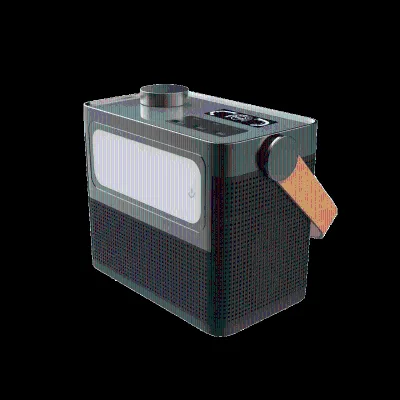

Comprehensive Sourcing Guide
Strategic Sourcing Guide for Outdoor Party Wireless Speakers with Colorful LED Integration
Understanding the Product Category and Technical Landscape
The market for outdoor party wireless speakers has evolved into a robust segment defined by high-power output, portable form factors, and integrated lighting systems. When sourcing a device described as an "outdoor party wireless speaker with colorful LED light," buyers must first recognize that the core functionality relies on a combination of active amplification, robust power delivery, and multi-mode connectivity. Based on current product observations, these units typically utilize a plastic housing designed to withstand variable environmental conditions while maintaining structural integrity. The amplification type is consistently active, meaning the speaker contains its own power amplifier rather than relying on an external unit, which simplifies setup for mobile events.
A critical technical differentiator in this category is the speaker configuration. The supply chain currently features models with varying woofer sizes, ranging from single 8-inch drivers to dual 8-inch configurations. This variation directly impacts the sound pressure level and the bass response, which are paramount for party environments. The observed power ratings for these units span a significant range, from 20W to 80W, indicating that buyers must align the power specification with the intended venue size. A 20W unit may suffice for small gatherings, whereas an 80W dual-woofer system is better suited for larger outdoor stages or DJ applications. Furthermore, the frequency response in observed models covers a broad spectrum from 60Hz to 20kHz, ensuring that both deep bass and high-frequency clarity are maintained during playback.
Connectivity is another pillar of the technical specification. Modern party speakers are expected to support multiple audio inputs simultaneously. The standard interface suite includes Bluetooth 5.0 for wireless streaming from mobile devices, alongside USB and TF card slots for direct media playback. FM radio functionality is also a standard inclusion, providing an additional source of entertainment without requiring a paired device. The signal-to-noise ratio (SNR) is a vital metric for audio purity; observed data indicates SNR values ranging from 70dB to 100dB. A higher SNR, such as the 91-100dB range, suggests a cleaner audio signal with less background hiss, which is crucial when the volume is turned up to party levels.
Power Supply Architecture and Operational Requirements
The operational reliability of an outdoor party speaker is heavily dependent on its power supply architecture. Unlike indoor home theater systems that rely solely on mains electricity, outdoor units must offer versatility in power sourcing. The observed product data reveals a dual-power capability in many models. Some units operate on a 9V DC supply, often provided via a dedicated adapter, while others support a broader AC input range of 100-240V at 50-60Hz. This wide voltage compatibility is essential for international procurement, ensuring the device can be used in regions with different electrical standards without the need for complex voltage converters.
Battery integration is a defining feature for "party" speakers, allowing for true portability. The specifications indicate the use of 7.4V batteries with capacities around 3600mA. This configuration suggests a balance between runtime and weight, though the exact duration of operation will vary based on volume levels and the activation of auxiliary features like LED lighting. Buyers should note that the presence of a battery necessitates a charging mechanism, typically included as a charger or adapter in the accessory package. The charging process itself should be verified to ensure it does not overheat the unit or degrade the battery life prematurely.
The power management system also includes control features for the audio output. Top panel controls for bass, treble, microphone volume, and echo are standard, allowing the user to tailor the sound profile to the specific acoustic environment. This level of control is particularly important for karaoke applications, where the balance between music and vocal amplification is critical. The inclusion of a remote control further enhances usability, allowing the operator to adjust settings from a distance, which is often necessary in a crowded party setting.
Compliance, Safety Standards, and Material Verification
When sourcing electronic audio equipment for outdoor use, compliance and safety are non-negotiable. While specific certification marks may vary by region, the physical construction of the speaker must meet rigorous safety standards. The primary material observed in this category is plastic, which offers durability and resistance to moisture compared to wood or metal alternatives. However, the quality of the plastic and the manufacturing process determine the unit's resistance to UV degradation and physical impact.
Buyers must verify that the product adheres to relevant electrical safety standards for the target market. This includes checks on the insulation of internal wiring, the safety of the battery compartment, and the thermal management of the amplifier components. The input voltage specifications (AC 100-240V) imply that the internal power supply unit must be designed to handle voltage fluctuations without failure. Additionally, the presence of a battery requires adherence to transport and storage regulations, particularly regarding lithium-ion or similar battery chemistries, to prevent fire hazards during shipping.
The "standard" designation for some models refers to the woofer size (e.g., 8-inch or double 8-inch), but this does not replace formal certification. Buyers should explicitly request documentation confirming that the product has passed safety tests for electrical shock, fire resistance, and electromagnetic compatibility (EMC). The absence of specific certification names in the general product description does not imply non-compliance, but it does require the buyer to demand proof of testing from the supplier before finalizing a purchase order.
Cost Drivers and Pricing Dynamics
The pricing of outdoor party wireless speakers is influenced by a complex interplay of factors, including power output, battery capacity, and the sophistication of the LED lighting system. The observed price range in the market spans from approximately $11.20 to $122.00 USD. This wide disparity suggests that the market is segmented by quality, feature set, and brand positioning. Lower-priced units in the $11-$30 range likely feature single woofers, lower wattage (20W), and basic LED functions. In contrast, the higher-end models approaching $120 typically offer dual 8-inch woofers, higher power outputs (80W), advanced Bluetooth versions, and more complex lighting patterns.
Minimum Order Quantity (MOQ) is another significant cost driver. The observed MOQ range varies from 1 unit to 600 units. For buyers testing the market or requiring small batches, the ability to source single units or low quantities is advantageous, though the per-unit cost may be higher. Conversely, bulk purchasers can leverage economies of scale, but they must be prepared to commit to larger volumes. The packaging method also impacts the final landed cost. Units shipped in "Strong Brown Boxes" with thick foam and plastic bags incur higher packaging costs than those in simple plastic bags, but they offer better protection against damage during transit, potentially reducing return rates and associated losses.
Typical Applications and Usage Scenarios
The versatility of these speakers allows them to serve a wide array of applications. The "Universal" compatibility of these devices means they can be integrated into various entertainment setups. Primary use cases include home theater systems, where the speaker acts as a powerful center or surround channel, and karaoke sessions, where the built-in microphone inputs and echo controls are essential. The "Portable Player" and "Mobile Phone" usage tags indicate that these speakers are designed for on-the-go entertainment, making them ideal for picnics, beach parties, and camping trips.
For professional applications, the "Stage/DJ" designation highlights the speaker's suitability for small-scale events. The high power output and robust construction make them capable of driving a crowd in a club or outdoor festival setting. The inclusion of FM radio and memory card support ensures that DJs can play a variety of content sources without relying solely on a laptop or smartphone. The "Outdoor Speakers" classification further emphasizes their design for environments where weather resistance and durability are paramount. The colorful LED lights add a visual dimension to these events, creating an immersive atmosphere that enhances the overall party experience.
Supplier Evaluation and Quality Control Protocols
Selecting the right supplier requires a rigorous evaluation process that goes beyond price comparisons. Buyers should prioritize suppliers who demonstrate transparency in their manufacturing processes and provide clear documentation of their product specifications. The origin of the products, often listed as China or specific regions like Gz (Guangzhou), indicates a concentration of manufacturing expertise in the audio electronics sector. However, geographic origin alone does not guarantee quality; it is the supplier's adherence to quality control standards that matters most.
Quality control should be implemented at multiple stages. First, buyers must verify the consistency of the product attributes, such as the SNR, power rating, and battery capacity, against the supplier's datasheets. Second, physical inspections should be conducted to check for defects in the plastic housing, the integrity of the connectors, and the functionality of the LED lights. Third, functional testing is essential to ensure that all audio inputs, Bluetooth connectivity, and remote control functions operate as intended. For bulk orders, implementing a pre-shipment inspection (PSI) is highly recommended to catch any potential issues before the goods leave the factory.
Long-Term Procurement and Supply Chain Considerations
Long-term success in sourcing outdoor party speakers depends on building a resilient supply chain. Buyers should consider the lead times associated with different order volumes and the reliability of the supplier's production capacity. The observed product models, such as the ED-812, AL42108, and AL08128F, represent specific configurations that may have varying availability. Establishing a relationship with a supplier who can consistently meet demand and maintain quality over time is crucial.
Packaging and logistics also play a significant role in long-term procurement. The use of strong brown boxes and thick foam indicates a commitment to protecting the product during transit. Buyers should ensure that the packaging standards remain consistent to minimize damage rates. Additionally, the availability of accessories, such as remote controls, microphones, and chargers, should be confirmed for every unit to ensure a complete user experience. Finally, buyers should monitor the market for updates in technology, such as newer Bluetooth versions or improved battery efficiencies, to ensure their product offerings remain competitive. By focusing on these strategic areas, buyers can secure a reliable supply of high-quality outdoor party wireless speakers that meet the demands of their customers.
FAQs
What power options are available for outdoor party wireless speakers?
These speakers support both DC and AC power inputs. Some models operate on 9V DC via an adapter, while others accept AC 100-240V for versatile international use. Battery options like 7.4V/3600mA also enable portable operation without immediate mains access.
Which speaker configurations are offered for party events?
Available configurations include single 8-inch woofers and dual 8-inch setups. Power ratings range from 20W for smaller gatherings to 80W for larger stages. The frequency response typically spans 60Hz to 20kHz to ensure clear audio across various volumes.
How is the audio signal quality maintained at high volumes?
Signal quality is maintained through a high Signal-to-Noise Ratio ranging from 70dB to 100dB. This ensures cleaner audio with less background hiss even when the volume is turned up. Active amplification is used to drive the speakers directly without external units.
Can these speakers be customized for specific branding needs?
Yes, customization is available for these outdoor party wireless speakers. Buyers can request specific modifications to meet unique branding or functional requirements. This flexibility allows for tailored solutions while maintaining the core audio and lighting performance standards.
What connectivity features do these speakers support?
Connectivity includes Bluetooth 5.0, USB disk support, and TF card slots. FM radio functionality is also standard, allowing playback without paired devices. Multiple inputs ensure compatibility with mobile phones, portable players, and computers for diverse entertainment sources.
How are these speakers packaged for safe international shipping?
Packaging typically involves strong brown boxes with thick foam and plastic bags. This robust protection minimizes damage during transit for heavy units. The specific packing method ensures the speaker and accessories remain secure throughout the supply chain journey.